
Recently, the research group led by Professor Weibing Lu from the Flexible Radio Frequency Technology Research Center, Southeast University, has published a comprehensive review paper on textile-based radio frequency active devices and systems. This review systematically summarizes the latest advances and development trends of smart textiles for wearable wireless communication and energy harvesting platforms. The work, entitled “Textile Radio Frequency Active Devices and Systems: Wireless Communication and Energy Harvesting”, has been accepted for publication in the prestigious international journal Research. Wenzhe Song is the first author, while Postdoc Hao Chen and Professor Weibing Lu are the corresponding authors.
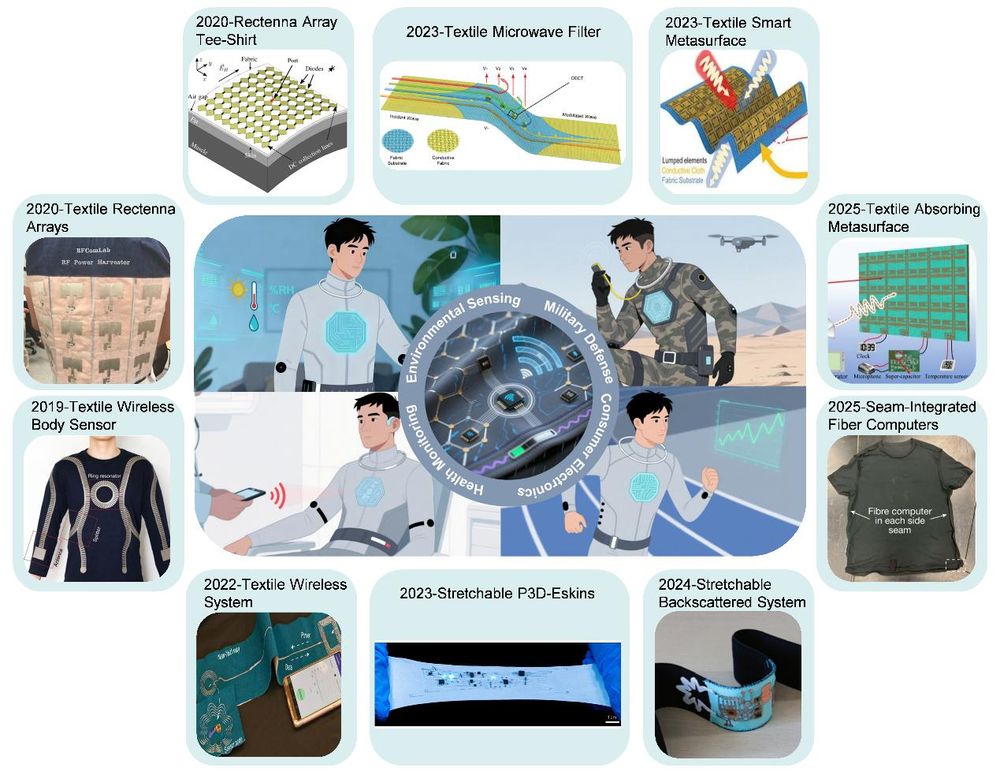
Figure 1 Timeline overview of textile radio frequency active devices and systems in multiple fields
【Research Background and Challenges】
In recent years, the rapid development of flexible electronics and smart textiles has driven wearable devices to evolve rapidly toward unobtrusive integration and intelligence. As the core enabler of wireless communication systems, the deep integration of radio frequency technology and smart textiles has opened new avenues for continuous health monitoring, dynamic environmental sensing, and seamless human–machine interaction. However, limited by their rigid structure and poor conformability, conventional rigid radio frequency devices remain incompatible with daily wearable applications. At present, the key challenge in textile radio frequency research has shifted from the flexibilization of individual devices to system-level full-stack integration. The ultimate goal is to break through the dual bottlenecks of material matching and complex electromagnetic design, and to build an intelligent all-textile radio frequency platform with self-powering capability, ultra-low-power communication, and distributed sensing networks.
【Core Content Overview】
This review comprehensively summarizes the development of textile radio frequency technology from fundamental devices to complex system-level applications, focusing on the following three core sections:
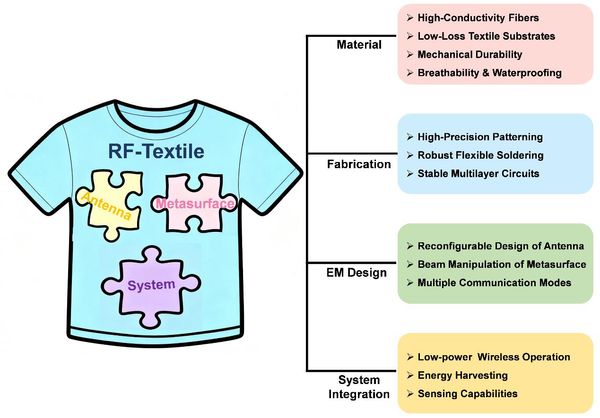
Figure 2 Key challenges of textile RF devices and systems
1. Textile Active Antennas
As the physical bridge of wireless communication, antennas are the foundation for system intelligence once integrated with active functions. This review elaborates on the latest design strategies of reconfigurable textile antennas (including frequency, polarization, radiation pattern, and hybrid mode reconfiguration) and textile rectennas. It focuses on analyzing innovative solutions such as coplanar reconfigurable modules and RF chip integration, to achieve reliable and high-efficiency interconnection between active components (e.g., varactor diodes, PIN diodes) and flexible porous textiles. Such designs realize excellent electromagnetic regulation performance while maintaining mechanical flexibility.
2. Textile Active Metasurfaces
To realize intelligent manipulation of spatial beams at the regional scale, researchers have developed textile-based active metasurfaces. A major fabrication bottleneck lies in the poor compatibility of rigid lumped elements with flexible porous textiles. This review systematically presents a series of landmark breakthroughs achieved by the research team in this field. First, the team pioneered a thermal-damage-free soldering-sewing assembly strategy, enabling the fabrication of textile-based intelligent metasurfaces with built-in sensing and decision-making capabilities. Such metasurfaces can adaptively switch between transmission and reflection modes according to the power intensity of incident electromagnetic waves, realizing electromagnetic protection from passive adaptation to active decision-making. Second, to pursue an ultimate fully flexible wearable experience, the team innovatively introduced organic electrochemical transistors to replace conventional rigid devices, and developed dynamic textile microwave filters. These devices perfectly conform to human body contours while enabling high-degree-of-freedom dynamic frequency tuning. Finally, targeting battery-free wearable demands, the team designed and constructed a textile metasurface electromagnetic energy harvesting platform. It efficiently scavenges ambient radio frequency energy via multi-band absorbing structures, successfully powering temperature, humidity and acoustic sensors, and thereby completing the self-sustaining energy loop for all-textile intelligent systems.
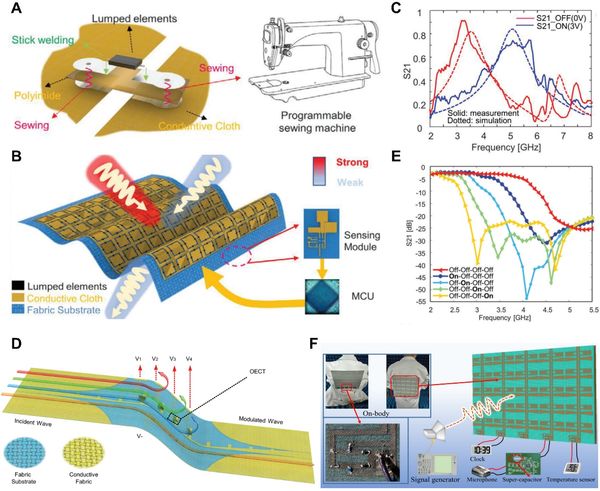
Figure 3 Overview of the team’s work on textile active metasurfaces
3. Textile-Based Active RF System
The review highlights that the technology is evolving from partially functional radio frequency devices toward an all-textile electronic platform with multi-dimensional sensing and self-energy supply. It elaborates on textile systems enabled by liquid metal digital embroidery technology, all-textile lithography, and ultra-low-power backscatter communication mechanisms. The paper also prospectively discusses the fiber computer technology, which weaves microchips directly into elastic fibers. This marks a paradigm shift of smart textiles from electronics on fabric to electronics as fabric.
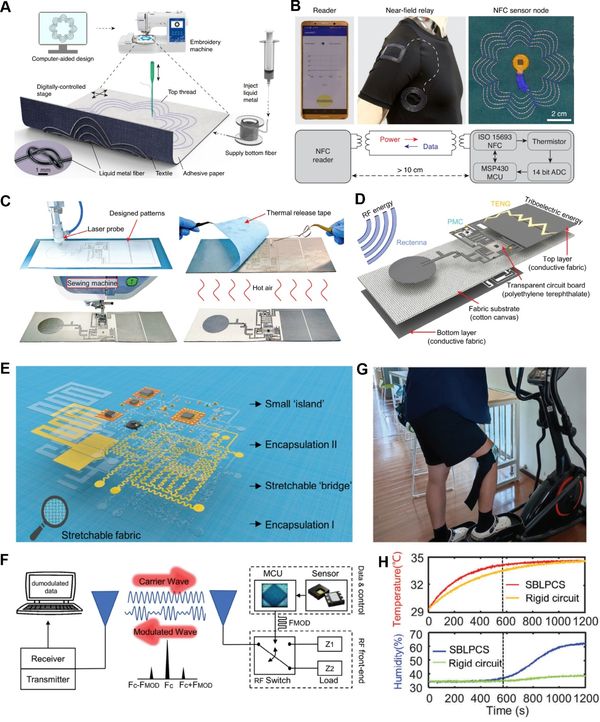
Figure 4 Overview of the development of textile active RF systems and representative research achievements of our team
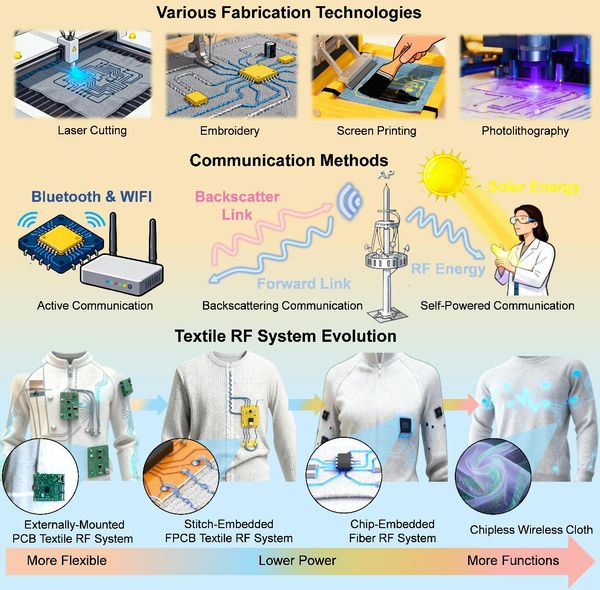
Figure 5 Evolution and prospect of textile RF systems in manufacturing technology, communication methods and system integration
【Conclusions and Future Outlook】
This review finally outlines a forward-looking development roadmap for textile radio frequency technology. It is pointed out that although breakthroughs have been made in flexible materials and fabrication processes, a series of deep-seated technical challenges still need to be overcome for large-scale practical application. These include maintaining electromagnetic robustness under large-area and complex deformation of garments, achieving high-precision patterning of multi-layer flexible RF circuits, and constructing efficient system-level multi-source energy management architectures. Looking ahead, empowered by cutting-edge technologies such as AI-assisted electromagnetic design and digital twins, textile RF systems will evolve toward high coordination with full self-powering, seamless integration, edge computing and long-range communication. It will accomplish a paradigm shift from being attached to textiles to becoming part of textiles itself, emerging as an invisible intelligent terminal that underpins digital healthcare, unobtrusive human-machine interaction and ubiquitous Internet of Things.
Funding
This work was supported by the Key Basic Research Program of Jiangsu Province (Grant No. BK20243015), the Key Program of the National Natural Science Foundation of China (Grant No. 62231001), the Fundamental Research Funds for the Central Universities (Grant No. 2242022k60004), the National Natural Science Foundation of China (Grant Nos. 62101115 and 12404451), the Jiangsu Funding Program for Excellent Postdoctoral Talent (Grant No. 2024ZB501), the China Postdoctoral Science Foundation (Grant No. GZB20240140), and the Natural Science Foundation of Jiangsu Province (Grant No. BK20230807).
Original Article
Song W, Chen H, Kou Z, et al. Textile Radio-Frequency Active Devices and Systems: Wireless Communication and Energy Harvesting[J]. Research, 2026, 9: 1101.https://spj.science.org/doi/10.34133/research.1101


 京公网安备 11010802027423号